






Magallanes and Chilean Antarctica Day
21/10/2026
21/10/2026
 5 min


Magallanes Day is celebrated every October 21st and commemorates the sighting of the entrance to the Strait of Magellan in 1520. It is a date that blends history, identity and Patagonian pride, and the region marks it with civic ceremonies, recognitions and activities throughout the area.
If you are thinking about traveling to southern Chile, it is a great excuse to understand where the place you are arriving in comes from.
The expedition that brought them here
It all began with the expedition Hernando de Magallanes, who, financed by King Carlos I of Spain, was looking for a route to the Moluccas, in Asia. Along the way, in late October 1520, the four ships called: Trinidad, San Antonio, Concepción and Victoria, reached the entrance to an unknown passage at the southern tip of the continent.
The ships entered the channel on November 1st, All Saints’ Day, so the passage was first named the Estrecho de todos los santos. Over time it came to be called the Estrecho de Magallanes.
Patagonia and Tierra del Fuego: where the names come from
The expedition left names on the map that we still use today. When they met the native peoples of the far south, the Europeans called them “patagones”, reportedly because of the guanaco-leather footwear they wore, which left huge footprints in the snow.
South of the Strait, they saw the bonfires of the inhabitants of the large island and named it Tierra del Fuego (Land of Fire). Today the island is shared between Chile and Argentina, and it is one of the most fascinating destinations at the end of the world.
After crossing the Strait, the fleet continued toward the Moluccas. Magallanes died in the Philippines in April 1521, and the expedition was completed by Juan Sebastián Elcano, in command of the carrack (Nao) Victoria, which returned to Spain in September 1522, completing the first circumnavigation in history.
Much later, in 1843, Chile founded Fuerte Bulnes to assert its presence in the Strait. The settlement was soon moved to a more favorable location, and that is how Punta Arenas (Sandy Point) was born, today the capital of the region. Its name is linked to old English maps that label the place as the “sandy point”.
The regional flag
Magallanes is not only different for its time, it keeps the daylight saving time all year round, unlike the rest of the country. It also has a regional flag known throughout Chile.
October 21st is also one of the dates on which this symbol is raised in the region. It was adopted by the Regional Council in 1996 and is one of Chile’s official regional flags.
The upper blue field carries the Southern Cross in white, the same stars that inspired our Chile Nativo logo, and alludes to the night sky and the region’s southern position. The white stripe represents the snow that falls frequently in winter, and the lower ochre field evokes the steppe and the coirón, the typical Patagonian grass.
That landscape inspired the historian Mateo Martinic Beros, who turned it into the design of the flag. In 1995, he proposed to the regional government the idea that Magallanes should have its own symbols of identity. The proposal was approved, and the flag was first raised on October 21st, 1996. Raising it on that date every year has since become a tradition.
The must-sees in Punta Arenas
The city is easy to explore on foot, and much of the best is free. These are the urban must-sees:

- Mirador Cerro de la Cruz: A panoramic view of the city’s rooftops and the Strait.
- Cementerio Municipal Sara Braun: One of the most beautiful in Chile, with trimmed cypress trees and mausoleums that tell the story of the city, and that will make you feel like you are in an old horror movie.
- Costanera del Estrecho: A walk along the water, ideal at sunset.
- Kiosco Roca: A classic meeting spot in the center to take a break and try the classic choripán (chorizo sandwich) with banana milk.
Three icons to understand the history
To connect with October 21st, here are three places that tell the story of the Strait and that you can visit in the city and its surroundings.
- Circumnavigation: A metal sculpture by the artist Francisco Gazitúa, an armillary sphere unveiled on October 21st, 2020 for the 500th anniversary of the expedition. Inside, it holds a representation of the carrack and a tribute to the native peoples of Patagonia and Tierra del Fuego. It stands facing the sea, on the waterfront.
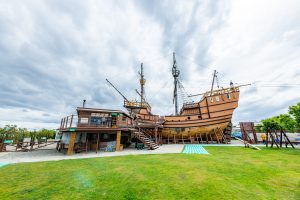
- Nao Victoria Museum: A full-scale replica of the carrack (Nao) that completed the first circumnavigation of the globe under the command of Juan Sebastián Elcano. It is about 7.5 km north of the center, and helps you imagine what it was like to sail in the 16th century.
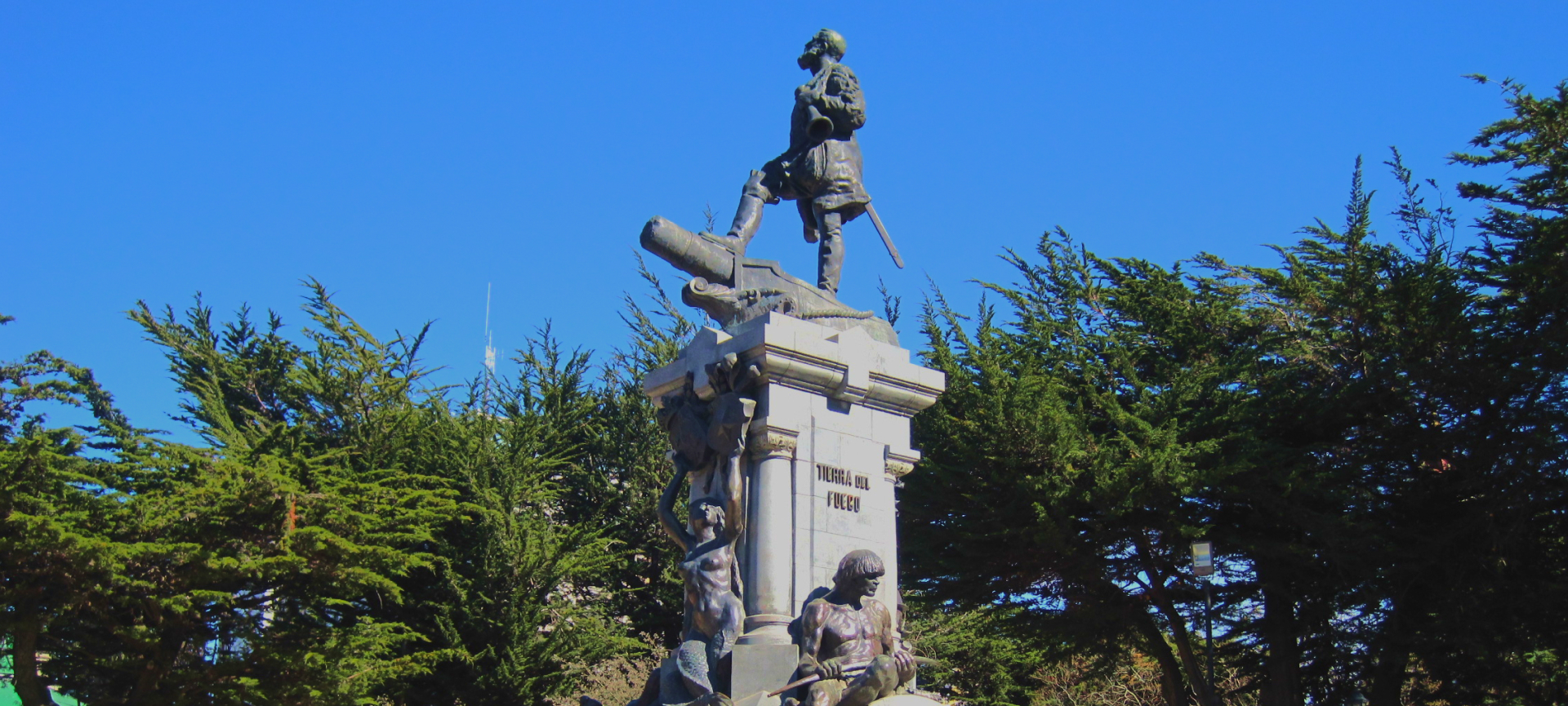
- Hernando de Magallanes Monument: Located in Plaza Muñoz Gamero. A large bronze sculpture by the sculptor Guillermo Córdova, unveiled in December 1920 for the 400th anniversary of the discovery of the Strait. At its feet there is a figure of an Indigenous man: tradition says that whoever touches or kisses the big toe of his foot will return to Punta Arenas. From so much touching, the bronze in that area shines and looks worn.