


National Parks: 100 Years of History
24/08/2026
24/08/2026
 8 min
8 min


On International National Parks Day, we sat down with Josefa Valenzuela, Chile Nativo’s Sustainability Manager, to reflect on 100 years of national park history, the challenges of conservation, and the role tourism can play in protecting these extraordinary places.
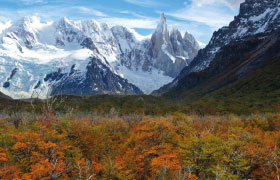
Chile is a country of unique natural richness. A land of volcanoes, ocean, desert, forests, and ice fields. A geography shaped by contrasts that makes our country exceptional when it comes to nature and biodiversity.
Today, Chile has 46 National Parks, 45 National Reserves, and 19 Natural Monuments, which together protect more than 18.8 million hectares. These territories safeguard ecosystems, species, and landscapes of vital importance, but they also play a role that often goes unnoticed: protecting water sources, watersheds, and spaces that are essential to the communities living in their surroundings.
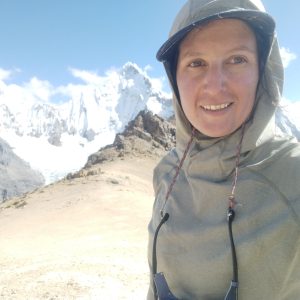
“We are part of nature,” says Josefa Valenzuela, Chile Nativo’s Sustainability Manager, when we talk about the importance of protected areas. And this idea runs throughout much of our conversation.
The creation of protected areas helps preserve land use and prevent territories of high ecological value from being transformed by activities that threaten their ecosystems. But their benefits go far beyond biodiversity. The mountains, forests, and watersheds within these areas are also closely connected to something as essential as access to water and the possibility of living in a healthy environment.
In a context marked by the climate crisis, this protection becomes even more relevant. Healthy ecosystems help reduce vulnerability to extreme climate events and sustain the natural processes on which we depend.
International National Parks Day
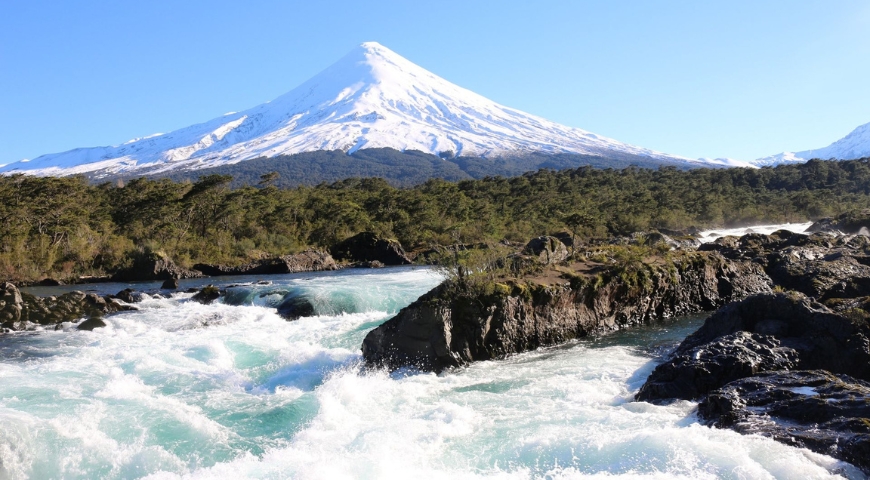
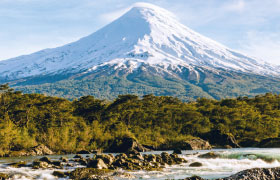
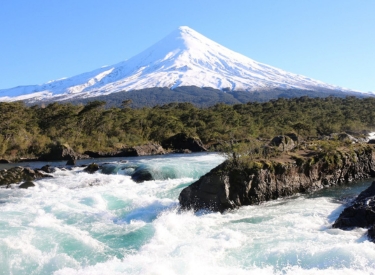
This date invites us to look at this history from another perspective. On August 17, 1926, Vicente Pérez Rosales National Park was established, making it Chile’s oldest national park. Since then, the protected areas system has grown to encompass a significant part of the country’s territory. If we also consider marine protected areas, nearly 30% of Chile’s surface area is now under some form of protection.
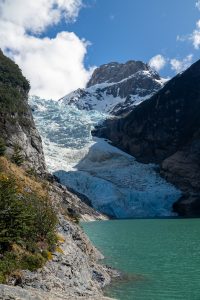
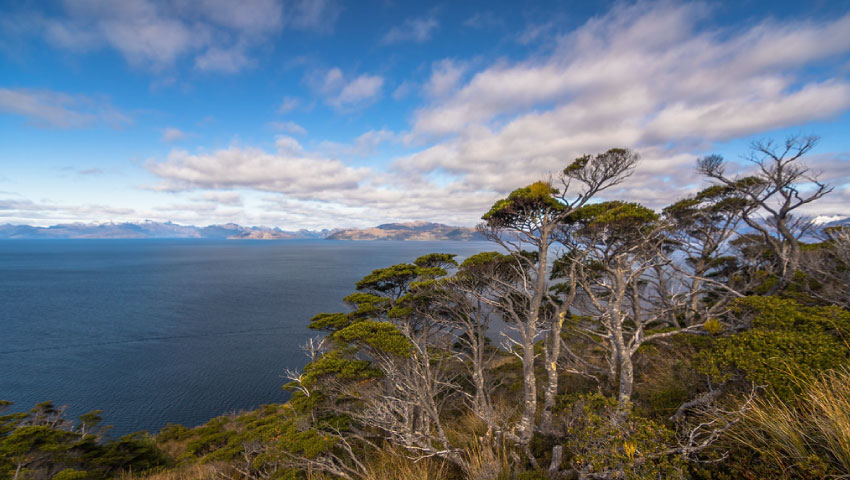
One of the best examples of this scale is Bernardo O’Higgins National Park, located between the Aysén and Magallanes regions. With an area of approximately 3.5 million hectares, it is Chile’s largest national park and one of the largest in the world.
A century after the creation of Chile’s first national park, it is worth asking how we can effectively care for what we have decided to protect. And here, Josefa identifies a fundamental challenge: creating protected areas is not enough if they do not have the resources they need to function.
“We can continue creating more national parks in Chile, but if we don’t have a State that can provide adequate funding, it serves no purpose,” she says. The lack of infrastructure, personnel, and resources for monitoring and enforcement is currently a major concern for conservation in Chile. And this becomes even more evident as the number of visitors arriving in these areas continues to grow.
Visiting and Conserving
Visiting a protected area inevitably creates impacts. There is transportation, resource consumption, waste, and pressure on certain places. At the same time, however, tourism can become a tool for local communities to find economic opportunities connected to the conservation of their territories.
Josefa expands on this idea, highlighting one of the characteristics that gives tourism transformative potential: “When tourism is carried out on a smaller scale and is community-led, the money stays there as well. So, if communities can sustain themselves through tourism, it makes it more sustainable and allows it to continue over time,” she explains.
Sustainability, then, cannot be understood solely from an environmental perspective. It also involves people, communities, local economies, and the way we relate to the places we visit.
In this sense, traveling can also be a way of contributing to ensuring that a territory continues to exist as we know it.
Our Perspective
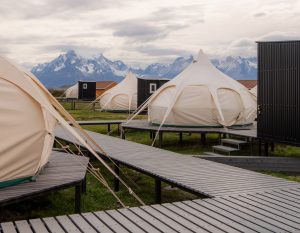
At Chile Nativo, this perspective has increasingly become part of the way we approach our work. Josefa explains that sustainability functions as a cross-cutting principle involving different areas of the company and goes far beyond the actions that travelers can see.
It is present, for example, in the way experiences are designed and in the search for a true “sense of place”: experiences connected to the territory, its communities, and the people who live there.
It can be found in something as simple as the elements accompanying an experience, crafted by Indigenous communities, as well as in the selection of guides who have a deep understanding of a territory. It is also present in all the decisions that take place long before a traveler arrives at their destination and continue long after their journey ends.
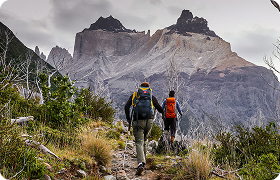
But there are also initiatives whose impact is much more tangible. Among them, Josefa particularly highlights Chile Nativo’s work with Torres del Paine Legacy Fund, an organization created to support conservation and infrastructure needs in Torres del Paine National Park.
Through contributions made by Chile Nativo travelers, we have supported different conservation projects. One of the most recent helped finance 70% of a native flora greenhouse, aimed at supporting the recovery of species lost in the major fires that have affected the park.
In this way, travelers become part of a chain that begins long before they set foot in the park, and one that can continue long after they leave.
→ Discover more about Chile Nativo’s sustainability initiatives here.
The Importance of Education
There is another dimension of tourism that Josefa considers especially important: education.
As a guide herself, she understands that her role is not only about identifying flora and fauna. It is also about providing context, explaining socio-environmental challenges, and helping visitors understand that what they are seeing is part of a much more complex system. After all, we can only truly protect what we have come to know.
And perhaps this is one of tourism’s greatest opportunities: creating an experience that does not end when we leave the park, but one that we carry with us long after.
Looking Ahead
Patagonia is experiencing a steady increase in visitors, and with it come new questions and challenges. According to Josefa, the challenge is particularly urgent because there is a gap between the number of people arriving in these territories and the capacity to properly manage them:
“We are promoting tourism and bringing more and more people, but we don’t have the necessary personnel or basic infrastructure in protected areas. That is a serious problem, because ultimately, it is a ticking time bomb.” This opens an important conversation about the kind of tourism we want for Patagonia, and under what conditions we want it to continue growing.
What Can We Do?
Conservation does not depend solely on major public policies, organizations, or companies. There is also an individual responsibility every time we enter a national park.
For Josefa, one of the first steps is to learn and follow basic Leave No Trace principles, respect trails, and take our waste with us. But there is something even simpler that, in reality, requires a deeper change: learning how to observe.
Respect wildlife from a safe distance. Do not feed animals. Lower your voice. Learn to listen. “Go with the intention of truly connecting with the place. Let’s not be so ‘human,’” she says with a laugh. The invitation is not meant literally, but rather as an encouragement to step away, for a moment, from our everyday routines and allow ourselves to experience the landscape differently.
We can also choose for our footprint to go beyond the unavoidable impact generated by our journey. We can educate ourselves, support conservation projects, or, whenever possible, contribute to organizations working on restoration and conservation.
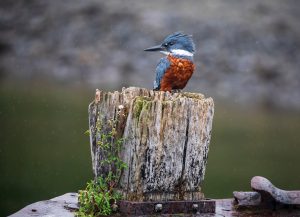
“If we love Patagonia for how wild it is, it’s important that we understand how we can help keep and preserve it that way,” she reflects.
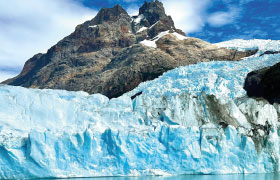
Because this place does not exist by chance. The forests, glaciers, mountains, and species we encounter along the way are part of living systems that need protection. And behind them are communities, park rangers, organizations, researchers, and countless people working every day to conserve them.
This August 24, on International National Parks Day, as we celebrate a century since the creation of Vicente Pérez Rosales National Park and the long history of protecting Chile’s natural areas, we are also invited to look ahead. To keep exploring. To keep learning. And, above all, to learn how to do so more consciously.